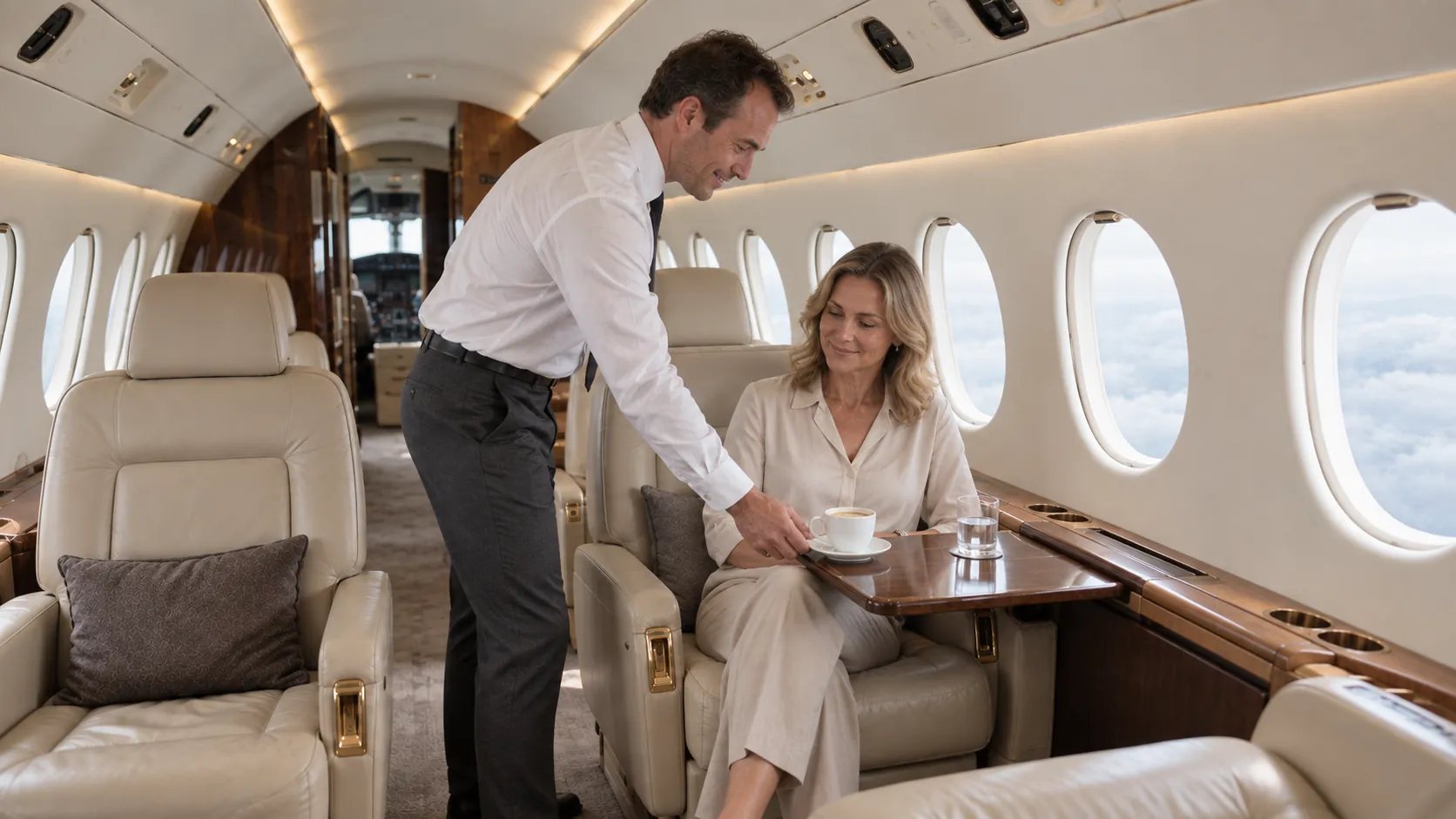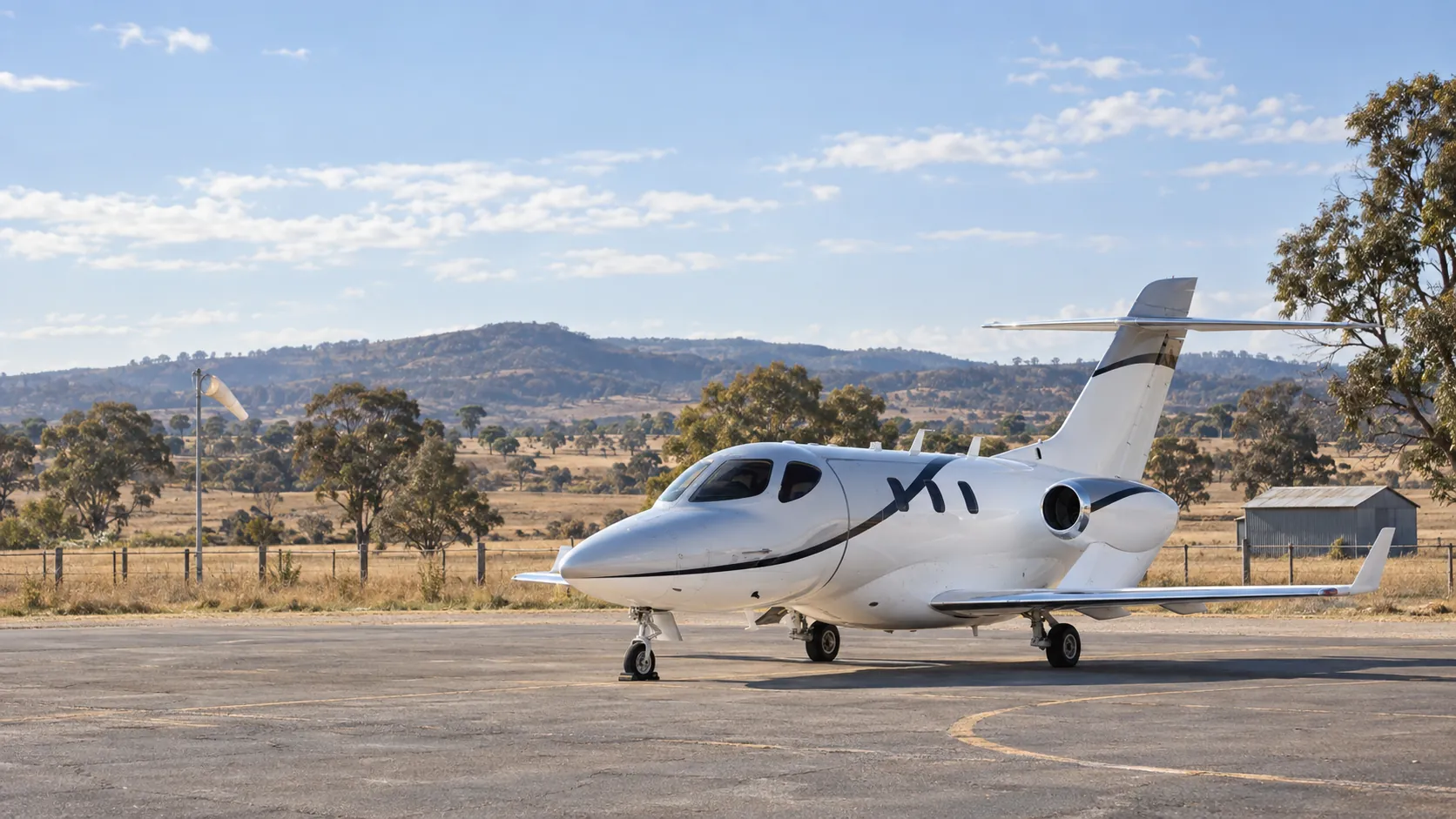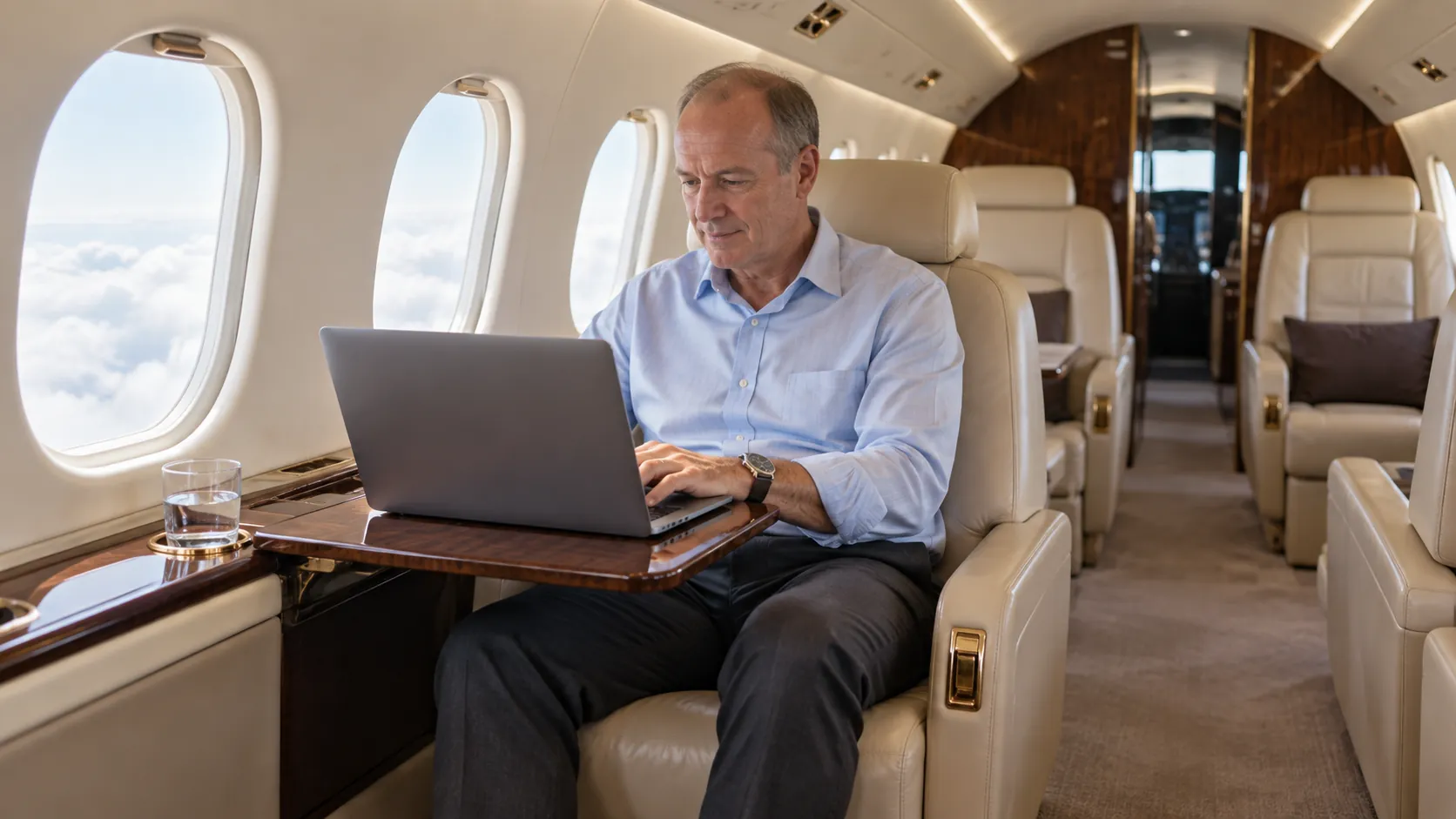
Charter is priced for the aircraft rather than per person, so the case for putting a team on one turns almost entirely on how many seats you fill. Charter One works this out on two routes: six executives flying Sydney to Melbourne come to $2,000 to $3,000 each, and six flying Sydney to Brisbane come to $1,400 to $2,000 each. Those are Charter One's light jet figures, for a flight of 70 to 80 minutes with a report time of 15 to 30 minutes.
The tax treatment is where corporate charter differs from a personal booking. Domestic charter carries 10 per cent GST that a registered business can claim back as an input tax credit, and private travel provided to an employee can be a fringe benefit. Both are worth settling with your accountant before the booking rather than after it.
Prices shown are published estimates only. Your final price will depend on the aircraft available, travel date, route, passenger numbers, luggage and any additional fees. Request a quote from the charter company for an exact price.
When the numbers work
Three situations make the arithmetic defensible, and none of them is about comfort.
Multi-city days. Charter One prices a two day Brisbane, Sydney and Melbourne circuit on a light jet at $35,000 to $45,000. The charter cost is measured against hotel nights and lost days, not against a single fare.
Places airlines serve badly. Canberra to Sydney runs at a 65.4 per cent airline load factor against a national average of 82.5 per cent, according to BITRE's 2025 figures, so seats are usually available and the case for a charter there is about timing. Perth to Karratha, which Charter One prices from $20,000 to $24,000 on a King Air or PC-12, is the resources version of the same problem.
Groups of five to eight. On the published figures, fewer than five people pushes the per-seat cost up sharply, and more than eight usually means a larger aircraft at a higher hourly rate.
Two companies quantify the time saved, and both sell flights, so treat the figures as their claims. Black Jet says commercial travel wastes more than two hours on every Sydney to Melbourne round trip. Airly puts it at 41 hours a year for someone making two or more trips a month.
What it costs per seat
| Route | Aircraft price | Basis | Passengers | Per seat | Business class, two one-way fares |
|---|---|---|---|---|---|
| Sydney to Melbourne | $12,000 to $18,000 | Light jet, trip type not stated | 6 | $2,000 to $3,000 | About $770 (Virgin), about $1,108 (Qantas) |
| Sydney to Brisbane | $8,000 to $12,000 | All in, light jet | 6 | $1,400 to $2,000 | About $718 (Virgin), about $1,098 (Qantas) |
| Sydney to Canberra | $14,000 to $18,000 | Same-day return, light jet | 7 | $2,000 to $2,570 | Neither airline publishes a business fare on this route |
| Sydney to Gold Coast | About $14,988 | Same-day return, Citation Mustang, incl. GST | 4 | $3,747 | Not published |
| Melbourne to Adelaide | $10,500 | Same-day return, light jet or turboprop | 6 | $1,750 | About $698 (Virgin), about $1,018 (Qantas) |
| Brisbane to Townsville | $15,000 to $18,000 | Turboprop, 2 to 2.5 hours | 8 | $1,875 to $2,250 | Not published |
| Melbourne to Perth | $50,000 | Light jet, trip type not stated | 8 | $6,250 | About $2,438 (Virgin), about $3,036 (Qantas) |
Charter prices checked 7 September 2026. Airfares checked 11 September 2026. The Sydney to Melbourne and Sydney to Brisbane per-seat figures are Charter One's own calculations. The rest divide a published aircraft price by a stated passenger count.
Read the last column carefully, because it flatters the airline. Virgin publishes lead-in business fares one way only, so the figures shown are two of those added together, which is our arithmetic rather than a fare anyone sells. They are also the cheapest seats in the cabin, with limited availability, and a genuine same-day out and back booked at short notice costs more. The Qantas figures come from an Australian Frequent Flyer analysis published in September 2025 and are roughly a year old. Sydney to Canberra has no business fare at all: Qantas runs that corridor largely on all-economy Q400 turboprops.
Even read generously, the comparison is honest about the answer. Six people flying Sydney to Melbourne pay $2,000 to $3,000 each on a charter against roughly $770 each in Virgin business. Charter is about two and a half to four times the price, and the case for it has to be built on the day you get back rather than on the fare. The comparison breaks down on Sydney to Canberra, where neither airline publishes a business fare.
Two things distort a per-seat figure if you let them. Aircraft seat counts are hard limits, so a Citation Mustang carries four and the sixth passenger means a different aircraft at a different price. And a seat left empty does not reduce the invoice.
GST
Domestic air transport is a taxable supply, so a charter within Australia carries 10 per cent GST. A GST-registered business travelling for business purposes can claim that back as an input tax credit provided it holds a tax invoice, per the ATO. Charter One's worked example is a $20,000 charter returning $1,818.
International legs to or from Australia are GST-free, according to the same ATO guidance, so a Sydney to Auckland charter is treated differently from a Sydney to Melbourne one.
Ask operators to show GST as a separate line. Some quote inclusive and some exclusive, and on a $50,000 charter the difference is $5,000.
Fringe benefits tax and private use
Where a flight carries an employee or an associate for private purposes, it can be a fringe benefit. Where it is a residual fringe benefit, the ATO puts the taxable value at the GST-inclusive cost less anything the employee contributes, and it can be reduced under the otherwise-deductible rule where the employee could have claimed the travel themselves. Substantiation is required, which in practice means a travel diary or an employee declaration. Charter One cites a 47 per cent FBT rate applying to the private-use portion.
On deductibility, the general principle is that the business portion of the cost is deductible under ordinary rules and the private portion is not. No aircraft-specific ATO ruling turned up in our source pack. This is general information rather than advice on your circumstances, so get your accountant to look at any trip with a mixed purpose before you book it.
Which operators quote businesses
| Company | Cities | Corporate features | Operator or broker |
|---|---|---|---|
| Navair | Sydney, Melbourne, Brisbane | 20-hour jet card, fleet from Mustang to Falcon 7X | Holds a certificate, CASA.AOC.0056 |
| Airly | Adelaide to Hamilton Island | 5, 10 and 25 hour jet cards, fixed rates, $0 repositioning | Broker, states it is not an airline |
| Light Jets Australia | Archerfield, Brisbane | 30-hour JetCard, no management fees | Holds a certificate, CASA.AOC.0502 |
| MJet | Not stated | Jet card program launching soon; says a flight attendant is on board all large jets | Not found on the CASA register |
| Charter One Aviation | Not stated | Charter, published cost guidance | Not found on the CASA register |
| Adagold Aviation | Not stated | Group and regional charter | Not found on the CASA register |
| CASAIR | Jandakot, Perth | Charter from Jandakot | Holds a certificate, CASA.AOC.0550 |
| The Air Charter Group | Not stated | Charter enquiries | Not found on the CASA register |
| Air Charter Service | Global, Australian site | International brokerage | Broker |
We checked this list against the CASA register on 29 September 2026. Navair, Light Jets Australia and CASAIR hold certificates. Airly says it is a booking agent, and Air Charter Service is a broker. Four companies did not appear under the names we searched, which is not proof they hold no certificate, because the register lists legal entities rather than trading names.
For a corporate account this distinction is worth getting in writing. A broker can be the right choice, particularly for multi-leg or international work, but your contract is with a company that will not be flying the aircraft. Ask which entity operates each sector and confirm the certificate number before procurement signs anything.
Booking for a team
Lead time costs money on a corporate booking the same way it does on a personal one. Charter One puts the premium inside 48 hours at 20 to 30 per cent and says a month ahead usually gets a better rate.
Budget for the items that sit outside the aircraft price. Catering runs $80 to $200 a head at Charter One for premium orders placed 48 hours ahead, and Air Charter Network quotes $76 to $229 a head for standard meals with 20 to 50 per cent added for late orders. Crew overnights are $305 to $917 per crew member per night. Ground standby time is billable when the aircraft waits for you.
Cancellation terms bind. Charter One says policies typically charge 50 per cent inside 48 hours and 100 per cent inside 24, which on a $45,000 multi-city circuit is a real exposure if a deal moves.
Cabin connectivity and workspace vary by aircraft and are not documented in our source pack, so confirm wifi and table configuration with the operator rather than assuming a light jet has either.
Common questions
Can my company claim GST on a private jet charter?
A GST-registered business can claim the input tax credit on a domestic charter used for business travel, provided it holds a tax invoice (ATO). International legs to or from Australia are GST-free. Ask the operator to itemise GST on the invoice.
Does FBT apply to a private jet?
It can. Private travel provided to an employee or associate can be a fringe benefit. Where it is a residual fringe benefit, the ATO values it at the GST-inclusive cost less any employee contribution, reducible under the otherwise-deductible rule where the travel would have been deductible to the employee. Keep the substantiation. Speak to your accountant about your own situation.
What is the smallest jet that works for a team of six?
A Citation CJ2 seats six and a CJ3 or CJ4 seats six or seven, according to Airly and Charter One. A Citation Mustang seats four, so it does not. Add luggage to the conversation early, because six people with overnight bags can push you up a class.
Is a jet card cheaper for a business than chartering trip by trip?
On Airly's published figures, a card is not cheaper than a good charter quote on a planned trip. The saving comes from fixed rates and no repositioning charges, which suits businesses whose travel is frequent but decided late.
How is charter treated if the trip mixes business and private travel?
The business portion follows ordinary deductibility rules and the private portion does not, with the private component potentially attracting FBT. There is no aircraft-specific ATO ruling in our source pack, so this is one to put to your accountant with the itinerary in front of them.
Send us the itinerary and we will put the same brief to several operators.