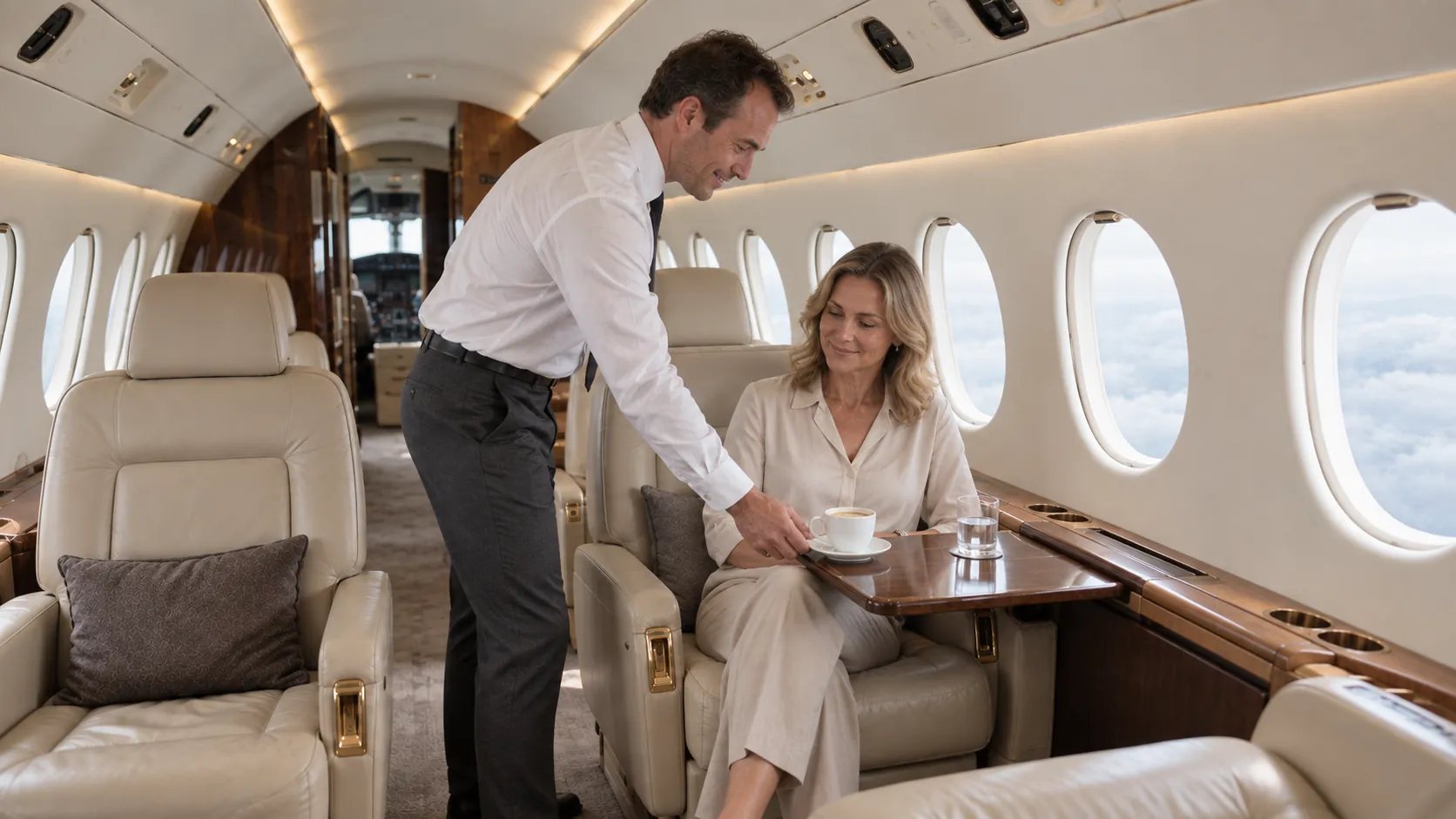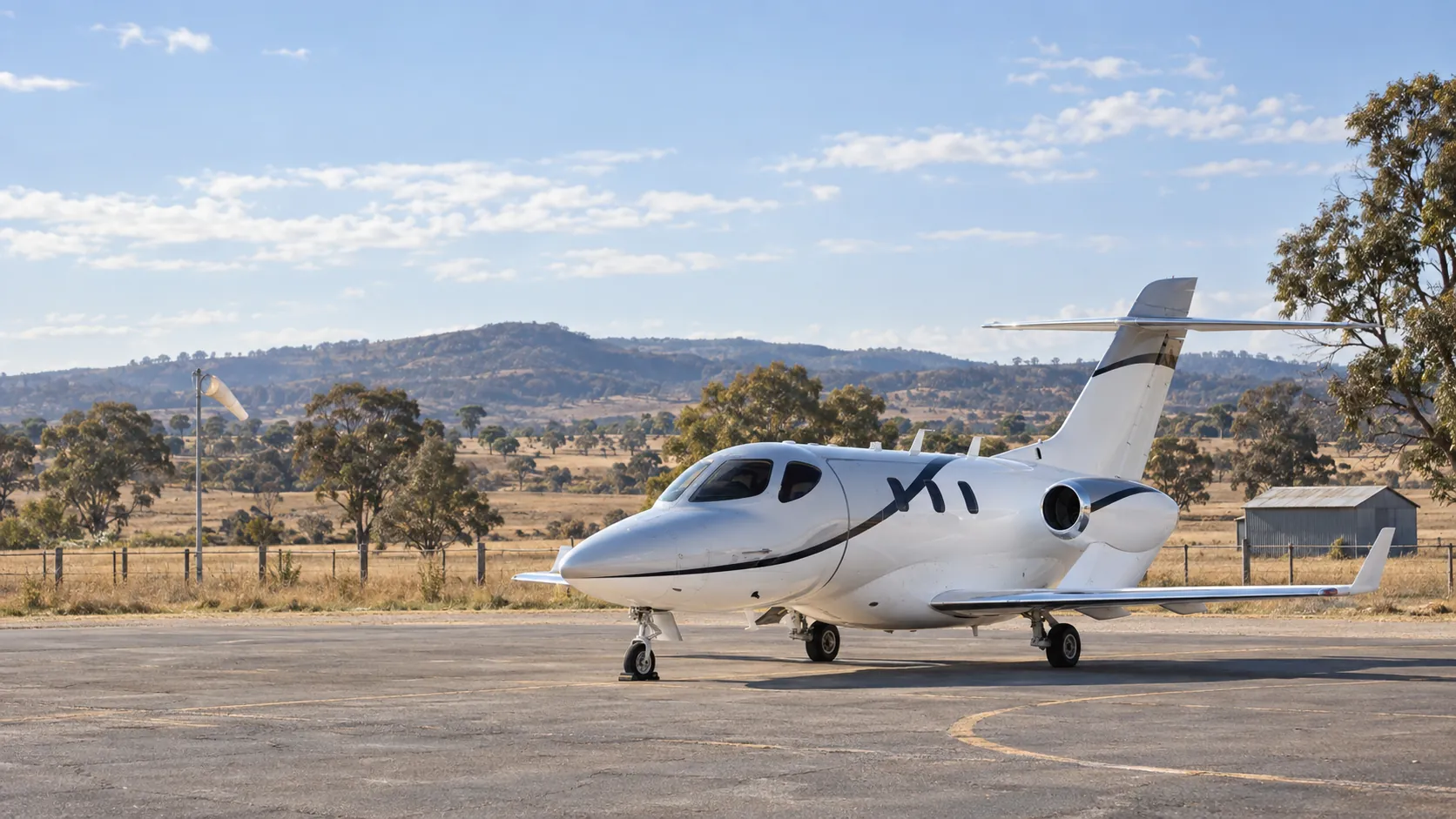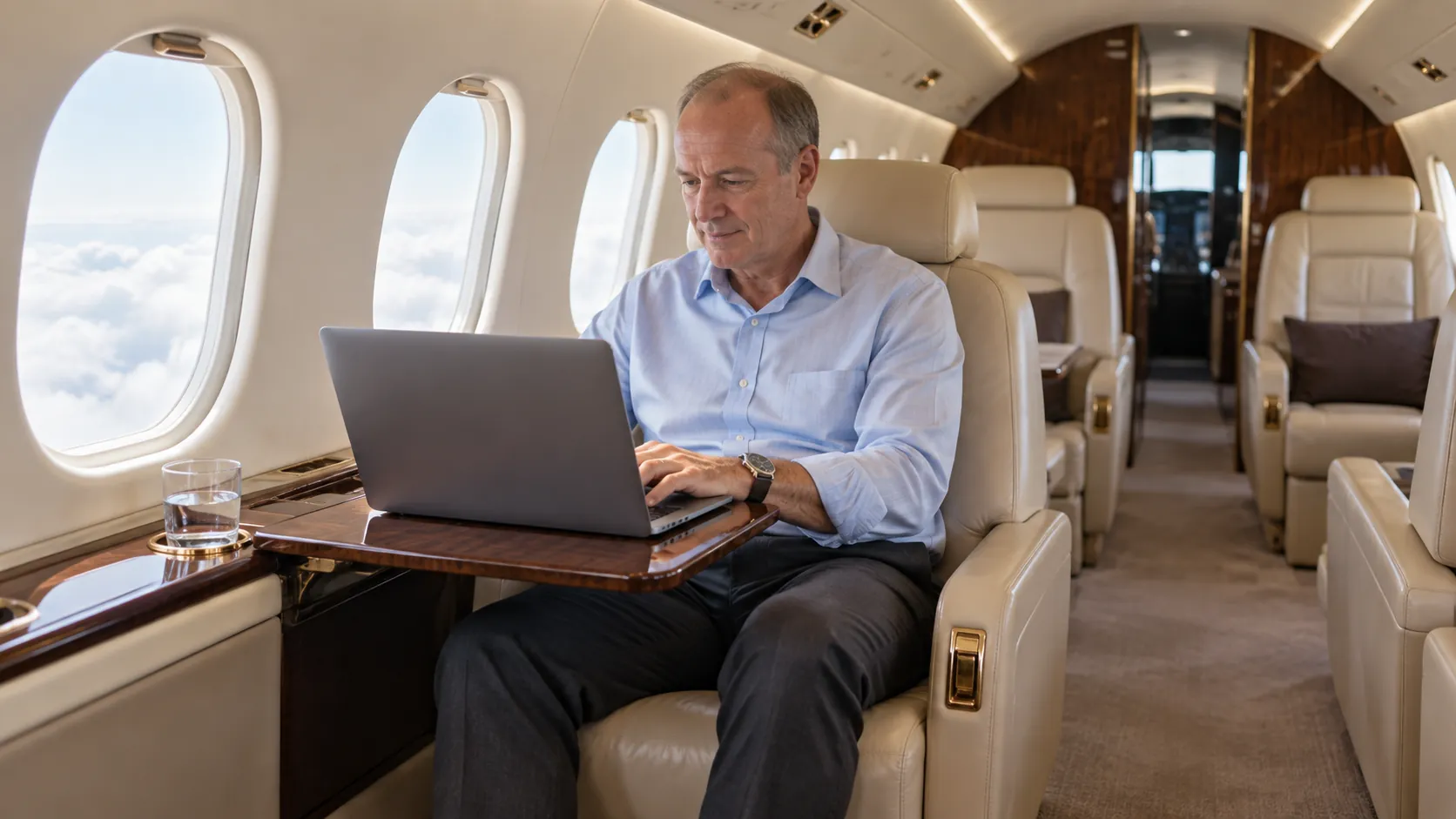
A jet card is a block of flight hours bought upfront at a fixed hourly rate on a defined group of aircraft. You draw the hours down as you fly, you pay only for time in the air rather than for repositioning, and the rate does not move when the market does. Six Australian programs sell some version of this, and only one has published firm rates: Airly's 2025 posts put a Citation Mustang at $4,795 per occupied hour and a CJ2 at $7,395. Navair, Light Jets Australia, The Jet Club and Black Jet do not publish rates, and MJet gives only an indicative range for a program that has not launched.
That secrecy is the first thing to weigh. You are being asked to commit to between 5 and 30 hours of flying, which on our rough arithmetic at published charter rates is somewhere between $25,000 and $200,000, before anyone will tell you the price.
Prices shown are published estimates only. Your final price will depend on the aircraft available, travel date, route, passenger numbers, luggage and any additional fees. Request a quote from the charter company for an exact price.
What you are actually buying
Four arrangements get discussed together and they are not the same thing.
Charter is a quote per trip. No commitment, no upfront money, and the price moves with availability and notice.
A jet card is prepaid hours at a fixed rate. You give up flexibility on aircraft type and gain price certainty, guaranteed availability at an agreed notice period, and usually no repositioning charge. Airly's card runs 12 months from your first flight, and its page says unused hours carry over.
Fractional ownership is buying a share of a specific aircraft. Airly sells a 25 per cent share at around $1.3 million plus GST, with hourly rates of $2,670 to $3,028. The industry body NBAA describes fractional shares as sold on the basis of 800 occupied hours a year, in fractions as small as one sixteenth, which works out at about 50 hours. Air Charter Network says fractional agreements typically require a 36 month minimum.
Full ownership brings crew, hangarage, maintenance and management on top of the aircraft. We have not seen a published hours threshold for it.
What each program publishes
| Program | Minimum | Annual fee | Hourly rate | Notice | Aircraft | Repositioning |
|---|---|---|---|---|---|---|
| Airly Jet Card | 5, 10 or 25 hours | None, per its September 2026 page | Mustang $4,795, CJ2 $7,395 (2025 rates); 2026 on request | 48 hrs Mustang, 48 to 72 Phenom 100, 72 CJ2 | Mustang 4 seats, Phenom 100 5, CJ2 6 | $0 |
| Navair Jet Card | 20 hours | Not published | Not published | Not stated for the card | Mustang, Phenom 100, CJ3+, Phenom 300 | Not published |
| Light Jets Australia JetCard | 30 hours | No management fees | Fixed, not published | 24/7 access | Citation jets | Not published |
| MJet: FLY M Jet Cards (Red Label Program), launching soon | Annual blocks at fixed hourly rates | Not published | Indicative only | Guaranteed with more than 24 hours | Not published | None within Australia, it says |
| The Jet Club | Card tier and invitation-only Black tier | On application | 5% off charter (Card), 10% off (Black) | 12 hours guaranteed (Black) | Brokered, various | Complimentary overnight positioning (Black) |
| Black Jet | Monthly subscription, pre-order | Not published | Unlimited Sydney to Melbourne, flat monthly fee | Not published | New turboprop, two pilots | Not applicable |
Rates checked: 7 September 2026. Airly and MJet details rechecked 29 September 2026.
One structural point before the pricing. Airly is a broker rather than an operator. Its own site states that it acts as a booking agent and that the operators it uses hold the CASA certificates. That is honest disclosure, and it does not make the card worse, but it changes what you are buying: prepaid hours on aircraft flown by third parties, not on a fleet the company controls. Navair and Light Jets Australia hold their own certificates, CASA.AOC.0056 and CASA.AOC.0502. MJet could not be found on the register under any name we searched. Its site describes MJet as a brokerage service and refers to operations under an AOC without naming the holder. Ask that question of any program before prepaying.
Airly's published pricing has moved and the record is inconsistent. Its June 2026 Jet Card page says there is no annual fee. Its own blog from June 2025 states an annual fee of $14,950 including GST for two card holders with booking rights, and a May 2025 post refers to an upfront commitment from $11,950 annually. Both figures may have been correct when written. Ask which applies to the contract in front of you rather than assuming the newest page governs.
The 2026 page also stops publishing dollar rates and switches to multipliers, with the Phenom 100 at 1.2 times the Mustang rate and the CJ2 at 1.45 times, and invites you to request current rates.
Two programs that need reading carefully
The Jet Club is a broker rather than an operator, which it states on its own site, and it holds no Air Operator's Certificate. Its product is a discount on brokered charter, 5 per cent on the Card tier and 10 per cent on the invitation-only Black tier, rather than prepaid hours on a fleet. It also publishes something almost nobody else does: client funds are held in a ring-fenced Westpac account. That answers what happens to your money if the company fails, and the absence of a similar statement elsewhere is a fair question to put to any program taking a large deposit.
Black Jet is not yet flying. The offer is unlimited Sydney to Melbourne flights for one flat monthly fee on a new turboprop with two pilots and emergency autoland, and Black Jet is awaiting regulatory approval, its website says. We checked the CASA register on 29 September 2026 and could not find an entry for it. The monthly price is not published and could not be retrieved. Until an AOC is in place and a fare is on the page, it is a pre-order rather than a travel option.
Where a card beats paying per trip
The arithmetic is less flattering than the marketing, and the saving usually comes from somewhere other than the headline rate.
Take Sydney to Melbourne, roughly 1.2 flight hours each way. On Airly's 2025 Mustang rate of $4,795 an hour, 1.2 hours each way is about $11,500 for a return, but Airly's own published card fare on this route is from $7,672 one way, or about $15,300 for a return. Charter quotes on the same route run $10,500 to $13,000 with FlightCharter and from $11,500 plus GST with Navair. On price alone, the card is not ahead of a good charter quote.
What the card actually buys is fewer variables. Airly says it charges no repositioning and that its hourly rates are fixed, so a short-notice booking should not carry the kind of last-minute premium Charter One puts at 20 to 30 per cent inside 48 hours. You also book against a known notice period. Airly published one comparison of its own showing a member flying Gold Coast to Sydney for $9,791 against a last-minute quote elsewhere of $18,936 on the same aircraft type. That is Airly describing its own product, but the mechanism it describes is real: the gap opens up on short notice, not on planned trips.
Below about 10 hours a year, charter plus the occasional empty leg costs less and commits nothing. Above roughly 20 to 30 hours, the price certainty and availability start to earn the commitment. That is a judgement rather than a published finding, and your own pattern of notice periods matters more than the hour count.
What to ask before you hand over money
Fleet size, and what happens when the aircraft you booked goes unserviceable. A guarantee is only as good as the number of aircraft behind it.
What "guaranteed availability" means in the contract, including whether peak dates are excluded. Melbourne Cup week and the Grand Prix are the obvious tests.
Whether unused hours expire. Airly says unused hours carry over. Light Jets Australia says its credit never expires. MJet says remaining credit rolls over when you renew its annual subscription. Ask the others directly.
Whether the rate is locked for the term or reviewable.
How client funds are held, and what happens if the company enters administration.
Whether the company holds an AOC or brokers to operators who do, and if the latter, which operators.
Common questions
How much does a private jet membership cost in Australia?
Only Airly publishes figures, and its 2025 rates were $4,795 per occupied hour on a Citation Mustang and $7,395 on a CJ2, with its September 2026 page stating no annual fee. Navair sells 20 prepaid hours and Light Jets Australia 30, both priced on application. Air Charter Network puts jet card deposits internationally at between $38,224 and $764,495.
Do jet card hours expire?
It varies and it is worth getting in writing. Airly says unused hours carry over. Light Jets Australia says its credit never expires. MJet says remaining credit rolls over when you renew. Ask the other programs directly.
Is a jet card cheaper than chartering?
On our arithmetic, not on the headline rate for a planned trip. The saving shows up on short notice bookings, where charter attracts a premium Charter One puts at 20 to 30 per cent inside 48 hours, and in avoided repositioning charges.
What is the difference between a jet card and fractional ownership?
A card is prepaid hours with no asset. Fractional means buying a share of a specific aircraft, at around $1.3 million plus GST for 25 per cent with Airly, typically on a 36 month minimum according to Air Charter Network, with lower hourly rates once you own it.
Can I use a jet card between Sydney and Melbourne?
Yes. Airly quotes card members from $7,672 one way on that sector, and Black Jet's entire pre-order proposition is unlimited flights on it.
Tell us roughly how many hours a year you fly and we will show you which programs fit.